



Ilorin’s Majestic Natural Landmark
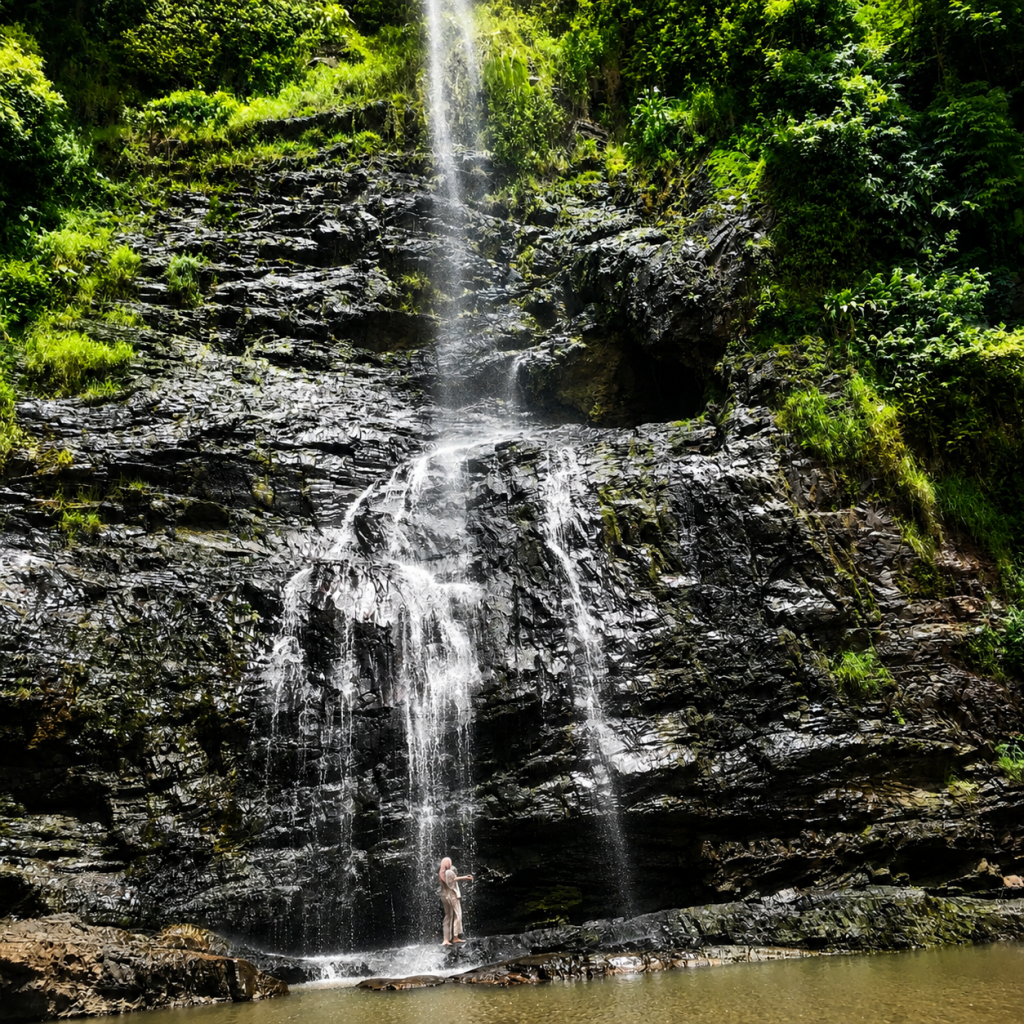
Owu Waterfall ranks among Nigeria’s most spectacular natural attractions and stands as one of the tallest waterfalls in West Africa. Located in the Owa-Onire (Owa-Kajola) area of Ifelodun Local Government Area, Kwara State, the waterfall plunges approximately 120 metres (330 feet) down a steep escarpment into a crystal-clear pool surrounded by massive rock formations and lush tropical vegetation.
Renowned for its breathtaking scenery, cool climate, and pristine natural environment, Owu Waterfall has become one of Kwara State’s premier ecotourism destinations. Its towering cascade, evergreen landscape, and tranquil atmosphere attract tourists, hikers, photographers, researchers, and nature enthusiasts from across Nigeria and beyond.
Often described as the “Wonder of Kwara”, the waterfall represents one of the state’s greatest natural treasures and remains an enduring symbol of its tourism potential.
Geographical Setting and Physical Characteristics
Location and Geography
Owu Waterfall lies in the Owa-Onire community, also known as Owa Kajola, in the southernmost part of Ifelodun Local Government Area of Kwara State, Nigeria. Although Ifelodun LGA administers the area, visitors can access the waterfall more easily through neighbouring local government areas.
The most common routes include Oke-Onigbin–Owa-Onire from Isin Local Government Area and Omu-Aran–Oru-Ago–Owa Kajola from Irepodun Local Government Area. Its strategic location near the boundaries of these areas makes Owu Waterfall one of the most accessible natural attractions in southern Kwara.
The waterfall lies at an elevation of approximately 590 metres (1,936 feet) above sea level on the northeastern edge of the Kukuruku Hills, a chain of rugged highlands extending from Ekiti State into parts of Kwara and Kogi States. Characterized by steep escarpments, rocky valleys, and deeply dissected terrain, these ancient hills create one of the most dramatic landscapes in Nigeria. The elevated topography and underlying rock formations provide the conditions that give rise to Owu Waterfall, making it a distinctive geological and ecological landmark within the region.
The Waterfall’s Dimensions and Structure
Owu Waterfall is renowned for its impressive height and dramatic geological setting. The main cascade plunges approximately 100 to 120 metres (330–394 feet) from the escarpment into a deep plunge pool below, leading many sources to regard it as one of the tallest waterfalls in West Africa. As the water rushes over massive rocky cliffs, it breaks into multiple streams before converging at the base, creating a constant veil of mist and a distinctive roar that visitors can hear from a considerable distance.
The plunge pool beneath the falls is fed by the continuous flow of crystal-clear water and remains remarkably cool throughout the year, even during the peak of the dry season. The persistent spray from the waterfall creates a humid microclimate that supports lush vegetation and a variety of plant and animal species uncommon in the surrounding Guinea Savanna.
Surrounding the waterfall is a rugged landscape of rocky escarpments, forested slopes, and rolling hills that form part of the Kukuruku Hills extending into Ekiti and Kogi States. Visitors reach the falls through a network of natural trails that pass through woodland, grassland, and rocky terrain before descending into the mist-filled gorge. The journey offers spectacular viewpoints of the surrounding countryside, making the approach to Owu Waterfall as rewarding as the waterfall itself.
Climate and Microclimate
Owu Waterfall is located within Nigeria’s Guinea Savanna ecological zone, which experiences a tropical climate marked by two distinct seasons. The rainy season typically lasts from April to October, while the dry season extends from November to March. Annual rainfall ranges between 1,000 and 1,280 millimetres, with an average of 170 to 190 rainy days each year. Temperatures generally vary between 20°C and 33°C, providing warm conditions throughout the year.
Despite these regional climatic conditions, the waterfall creates a distinctive microclimate around its immediate surround