


Overview
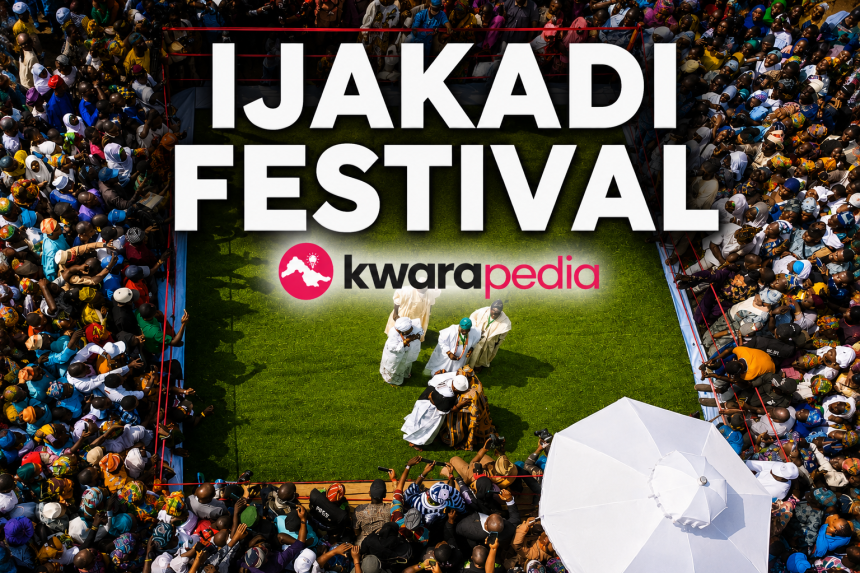
The Ijakadi Festival is one of the most important traditional festivals in Kwara State and the foremost cultural celebration of the ancient town of Offa. Held annually in December, the festival celebrates the history, identity, courage, and communal values of the Offa people. Its highlight is the symbolic mock wrestling contest between the Olofa of Offa and the Essa, the second-in-command of the traditional hierarchy, representing the virtues of strength, justice, and responsible leadership. The festival has evolved into a major cultural and tourism event, attracting thousands of visitors, indigenes, and tourists from across Nigeria and the diaspora.
The word “Ijakadi” is a Yoruba term meaning “wrestling.” The popular saying “Ijakadi l’oro Offa” (“Wrestling is the game of Offa”) reflects the town’s long-standing association with the sport. Rather than being a competitive sporting event, the festival’s wrestling match is ceremonial, dramatizing the relationship between the king and his chiefs while reinforcing unity, fairness, and loyalty within the kingdom.
Historical Origin: From the 13th Century to the Modern Era
The Moremi/Onimoka Foundation
The Ijakadi Festival’s deepest roots lie in the Odun Moremi (Moremi Festival) or Odun Onimoka (Onimoka Festival), an ancient celebration dating to the 13th century. This festival honored Moremi Anera, the legendary Yoruba heroine who sacrificed her only son, Oluorogbo, to save the people of Ile-Ife from enemy raids disguised as masquerades. After her heroic deed, Moremi relocated to Offa, where she was deified, and the festival was established in her honor.
The Onimoka Festival was rich with ritual significance. The Olofa (king) and his chiefs would dress in pure white garments reminiscent of the Mecca pilgrimage, entering the Moremi shrine to make prayers and proclamations for the people. The festival featured masquerade displays, dances, beauty contests, and—centrally—wrestling bouts that served as both entertainment and warrior training.
The Founding Legend: Two Brothers, One Yam
The specific wrestling tradition that became Ijakadi traces to a foundational legend involving Olalomi Olofagangan, the first Olofa of Offa (reigning circa 1397–1448). According to oral tradition, Olalomi had two sons who worked alongside him on his farm. During one yam harvest, Olalomi gave the boys eight yams to wash at the river. While washing, the river carried away one tuber, leaving seven. The brothers argued fiercely over who would take four and who would take three, their dispute escalating into a physical wrestling match.
When Olalomi arrived at the scene, he did not favor one son over the other. Instead, he took one yam tuber and cut it into two equal halves, giving each boy exactly three and a half yams. This act of equitable division became the moral cornerstone of Offa culture—a symbol of fairness, justice, and the community’s abhorrence of inequality. The wrestling between the brothers was institutionalized as a festive tradition, and the phrase “Ijakadi loro Offa” was born.
The Olofa-Eesa Wrestling: Authority and Play
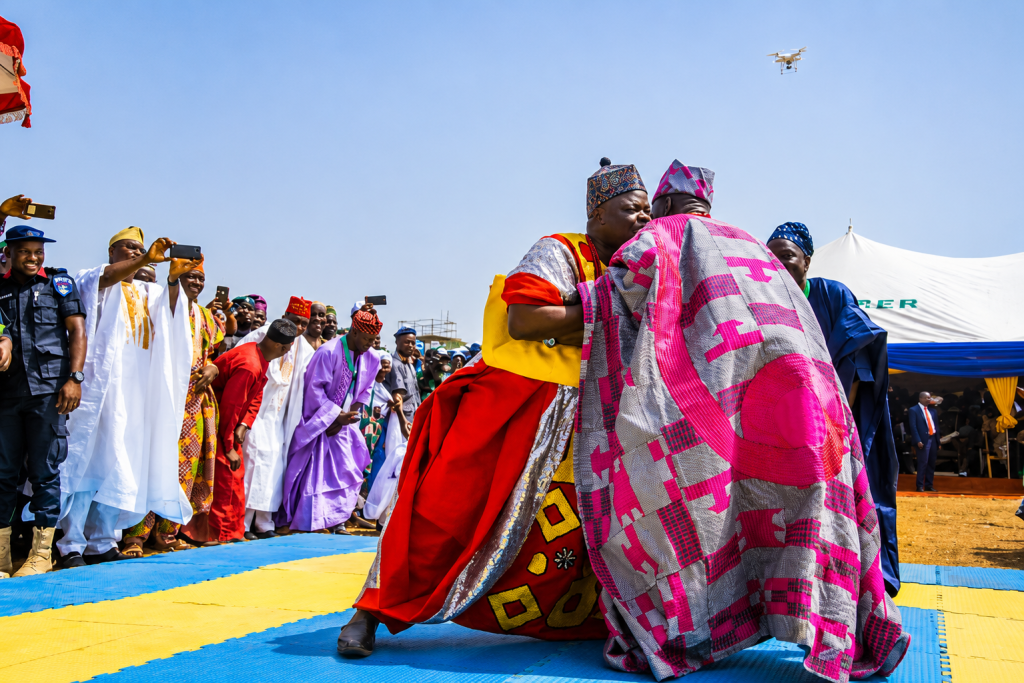
A parallel tradition developed around the relationship between the Olofa (king) and the Eesa (head of the kingmakers). In a symbolic wrestling bout, the Olofa and Eesa would grapple before the entire town, with the Olofa invariably emerging victorious—a reminder of his indisputable authority. The Eesa, in turn, would offer humorous excuses for his loss, such as “Suku lo yo mi” (“it was the corn chaff that slipped me”), eliciting roars of “Kabiyesi o!” from the crowd. This ritual transformed hierarchy into theater, making power visible yet playful.
The Decline and Revival: From 1979 to 2011
The Silence of Three Decades (1979-2010)
The ancient Onimoka Festival held its last full celebration in 1979 before entering a prolonged decline that lasted for more than three decades. Several fa