

Overview
The National Assembly is Nigeria’s federal legislature and one of the three arms of the Federal Government, alongside the Executive and the Judiciary. It is responsible for making laws for the peace, order and good governance of the country, approving the national budget, overseeing the activities of the Executive, and representing the interests of Nigerians at the federal level.
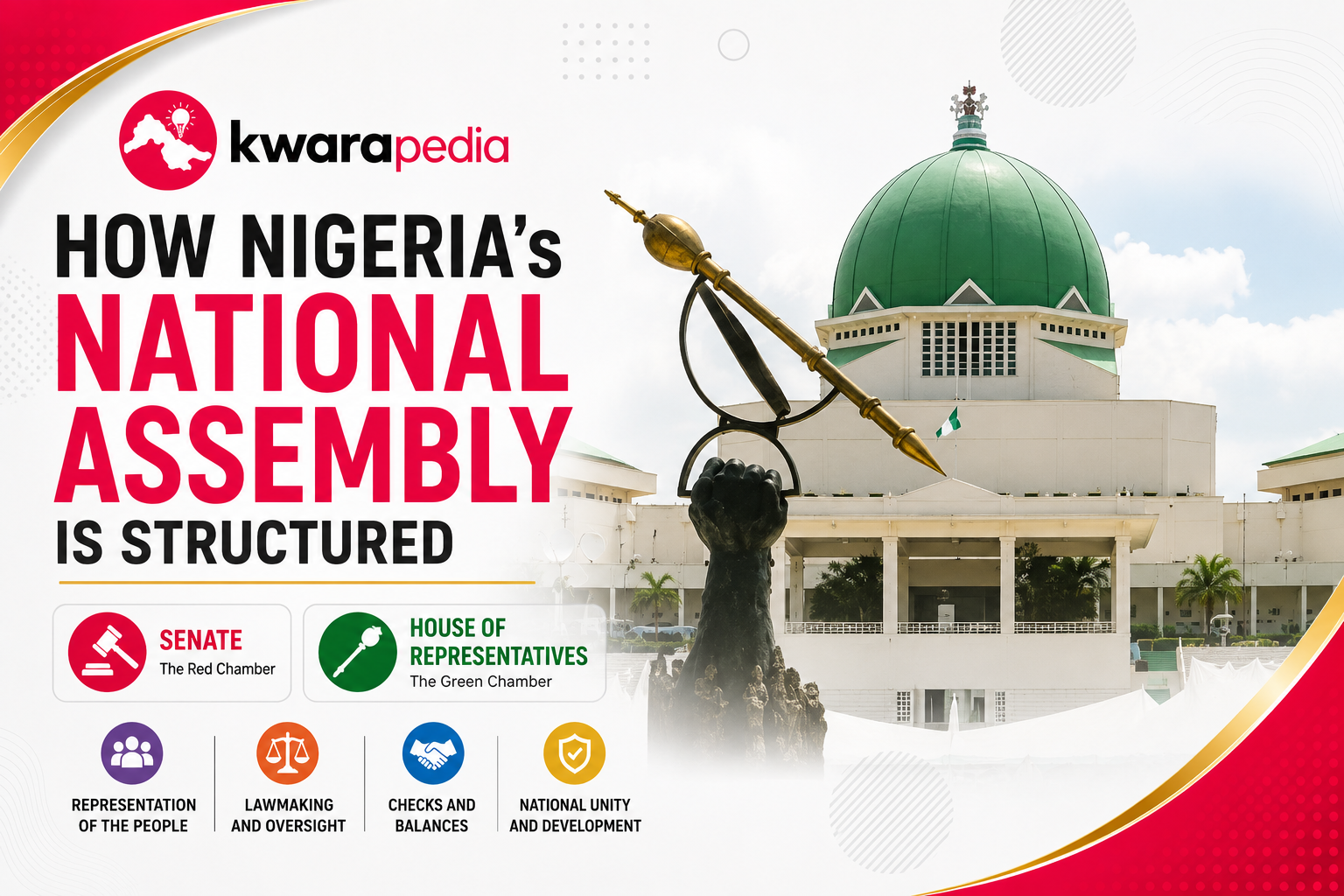
Nigeria operates a bicameral legislature, meaning the National Assembly is made up of two separate chambers: the Senate (Upper Chamber) and the House of Representatives (Lower Chamber). Together, these chambers comprise 469 elected lawmakers representing every part of the country.
Understanding the structure of the National Assembly helps citizens appreciate how laws are made, how different parts of Nigeria are represented, and how democratic governance functions at the federal level.
What Is the National Assembly?
The National Assembly is Nigeria’s highest law-making institution. It exercises legislative powers on behalf of the Federal Republic of Nigeria as provided by the Constitution.
Its primary responsibilities include:
- Making federal laws.
- Amending the Constitution.
- Approving the annual national budget.
- Exercising oversight over the Executive.
- Representing the interests of citizens.
- Confirming certain presidential appointments where required by law.
The National Assembly meets at the National Assembly Complex in Abuja, the Federal Capital Territory.
The Two Chambers of the National Assembly
Nigeria’s National Assembly consists of:
- The Senate
- The House of Representatives
Although both chambers work together to make laws, they differ in composition, representation and certain constitutional responsibilities.
The Senate
The Senate is the Upper Chamber of the National Assembly. It consists of 109 Senators, comprising:
- Three Senators from each of the 36 states (108 Senators)
- One Senator representing the F