


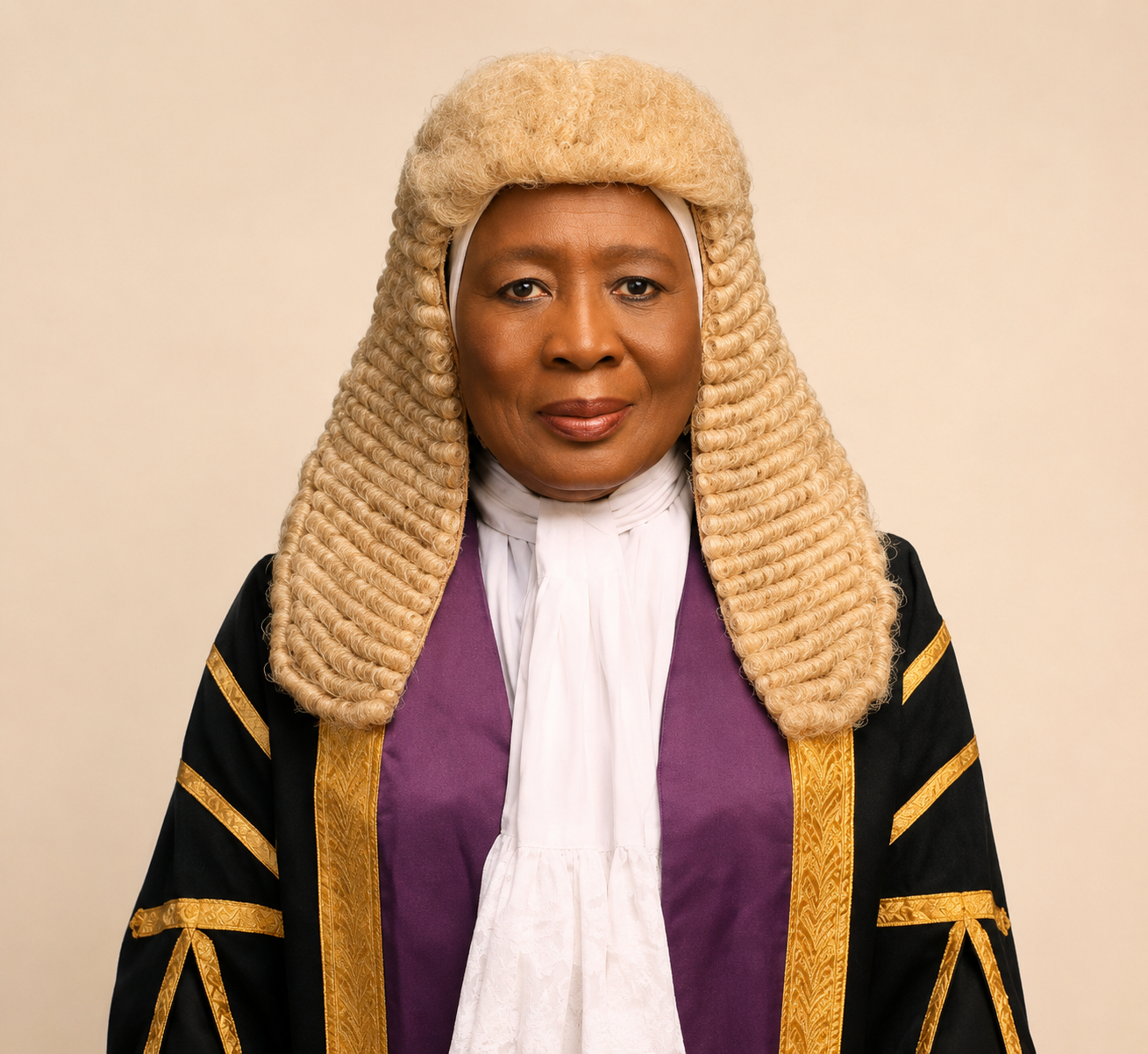
Quick Facts
- Full Name: Raliat Elelu-Habeeb
- Date of Birth: 14 September 1947 (Age 79)
- Profession: Jurist
- Former Position: Chief Judge of Kwara State (appointed March 6, 2008; removed May 4, 2009; reinstated February 17, 2012)
Introduction
Honourable Justice Raliat Elelu-Habeeb is a retired Nigerian jurist and former Chief Judge of Kwara State. She is widely recognized for her distinguished judicial career and for her landmark legal battle that reinforced the constitutional role of the National Judicial Council (NJC) in the appointment and removal of judicial officers in Nigeria. Her case remains one of the most cited judicial independence decisions in Nigerian constitutional law.
Early Life and Education
Hon. Justice Raliat Elelu-Habeeb was born in Ilorin, Kwara State, Nigeria. She hails from the Ilorin Emirate and is widely recognized as a trailblazer in the Nigerian judiciary, becoming the first female Chief Judge of Kwara State.
She received her primary and secondary education in Nigeria before pursuing a degree in Law. After obtaining her Bachelor of Laws (LL.B.) degree, she attended the Nigerian Law School and was called to the Nigerian Bar as a Solicitor and Advocate of the Supreme Court of Nigeria.
Her legal education laid the foundation for a distinguished judicial career that culminated in her appointment as Chief Judge of Kwara State in 2008.
Judicial Career
Justice Elelu-Habeeb served in various capacities within the Kwara State Judiciary before attaining the office of Chief Judge of Kwara State.
On 28 March 2008, she was appointed Chief Judge of Kwara State, becoming the head of the state’s judiciary and assuming responsibility for judicial administration, court reforms, and the supervision of judicial officers across the state.
As Chief Judge, she championed judicial efficiency, institutional discipline, and improvements in the administration of justice within Kwara State. She was also involved in initiatives aimed at strengthening the judiciary and enhancing public confidence in the courts.
Constitutional Crisis and Removal from Office
Justice Elelu-Habeeb became a national figure in 2009 following a constitutional dispute over her removal as Chief Judge of Kwara State.
In May 2009, the Kwara State Government and the State House of Assembly removed her from office on allegations relating to the discharge of her duties. She challenged the action in court, arguing that neither a state governor nor a state legislature could remove a Chief Judge without the involvement of the National Judicial Council (NJC).
The case generated widespread national interest because it raised important constitutional questions regarding judicial independence and the separation of powers.
Supreme Court Victory
In a landmark judgment delivered on 17 February 2012, the Supreme Court of Nigeria ruled in favour of Justice Elelu-Habeeb and ordered her reinstatement as Chief Judge of Kwara State.
The Supreme Court held that a Chief Judge of a state cannot be removed without recourse to the National Judicial Council. The judgment became a major precedent in Nigerian constitutional law and strengthened judicial independence by affirming the constitutional role of the NJC in disciplinary proceedings involving heads of courts.
The decision is widely regarded as one of the most significant judicial pronouncements on the autonomy of the judiciary in Nigeria’s Fourth Republic.