


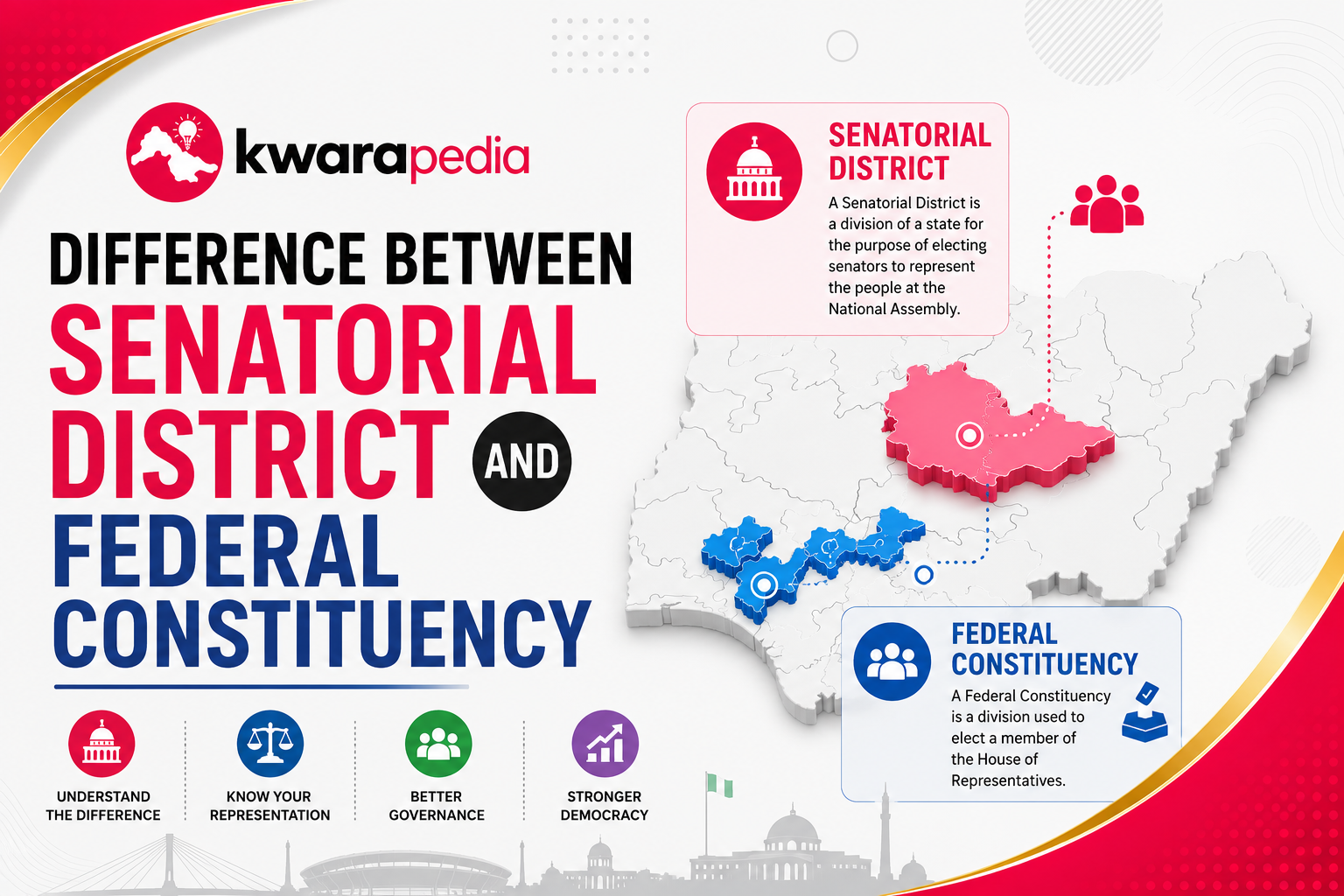
Overview
Nigeria’s electoral system is divided into different constituencies to ensure fair representation at the National Assembly. Two of the most commonly misunderstood electoral divisions are the Senatorial District and the Federal Constituency.
Although both are geographical areas created for electing representatives to the National Assembly, they serve different purposes. A Senatorial District elects a Senator to represent the people in the Senate, while a Federal Constituency elects a Member of the House of Representatives to represent the people in the House of Representatives.
Understanding the difference between these two constituencies is important for civic education, elections and understanding how Nigeria’s legislative system works.
What Is a Senatorial District?
A Senatorial District is a large electoral division that elects a Senator to the Senate, the upper chamber of Nigeria’s National Assembly.
Under the Nigerian Constitution, each of the 36 states has three Senatorial Districts, while the Federal Capital Territory (FCT), Abuja, forms one Senatorial District. This structure gives each district a designated representative in the Senate.
This gives Nigeria a total of:
- 108 Senatorial Districts (36 states × 3)
- 1 Senatorial District for the FCT
Total Senators: 109
Each Senatorial District elects one Senator for a four-year term.
Importance of a Senatorial District
A Senator