


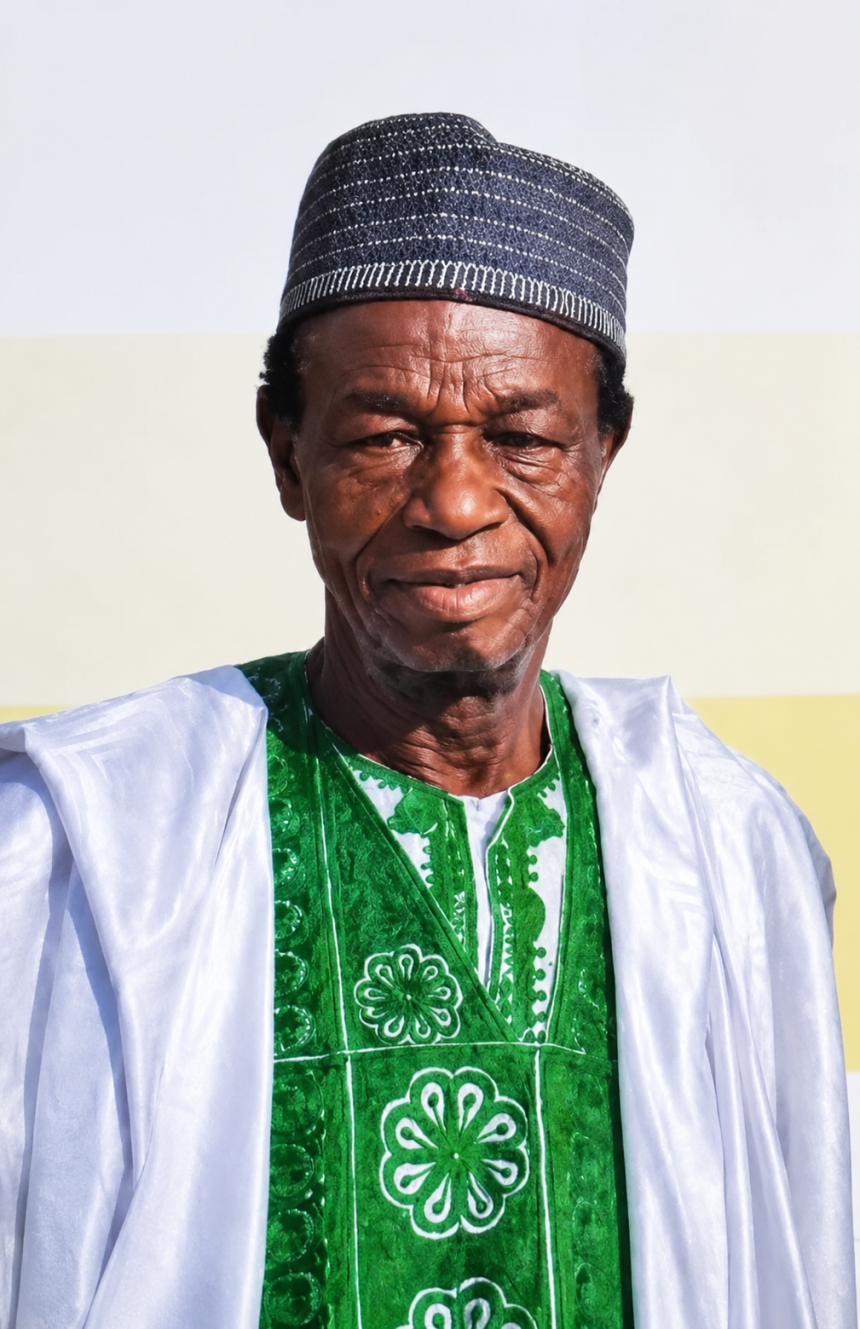
Quick Facts
- Full Name: Alhaji Muhammad Àmínù Kúràngà
- Popularly Known As: Jaigbade Alao
- Years Lived: (1903 – March 20, 2023) 120 years
- Demise: 3 years ago (March 20, 2023)
- Profession: Musician, Composer, Cultural Ambassador
- Notable For: Pioneer and foremost exponent of Dadakuada music
- Traditional Title: Oba Olorin (King of Musicians)
- Honours: Honorary Doctorate Degree in Music (KWASU)
Introduction
Alhaji Muhammad Àmínù Kúràngà, popularly known as Jaigbade Alao, was a legendary Nigerian musician, composer, and cultural icon from Ilorin, Kwara State. Widely regarded as the leading figure in the development and popularization of Dadakuada music genre (a traditional Ilorin/Kwara style blending poetry, percussion, and social commentary), he enjoyed a career that spanned more than eight decades.
His music celebrated life, morality, history, and community values, making him one of Kwara’s most enduring cultural ambassadors and a trailblazer in preserving and modernizing indigenous Yoruba/Ilorin musical traditions.
Early Life
Jaigbade Alao was born in 1903 in Ilorin. He hailed from Baba Oyo Compound in the Oke-Anifowose area of Pakata, while his father, Mallam Kuranga, was a farmer and his mother was Madam Salamatu. Unlike many of his contemporaries, he had limited access to formal Western and Qur’anic education in his early years. Nevertheless, his natural talent for music and oral poetry distinguished him from a young age. He later trained under the renowned musician Akano Oloru, where he developed the skills that would launch his legendary career.
Contributions
Pioneer of Dadakuada Music
- Founded his own Dadakuada music group around 1939.
- Helped transform Dadakuada into the most recognizable traditional music genre associated with Ilorin.
- Popularized indigenous music rooted in Yoruba, Fulani, Nupe, and Ilorin cultural traditions.
- Produced dozens of albums and musical recordings over several decades (reportedly 47+), including classics like Kama Seyi Lasemo, Eiye Ogongo, Moriba Mokun, and others that addressed social issues, praise, and daily life.
Cultural Preservation
- Used music as a medium for documenting history, celebrating achievements, and promoting social values.
- Served as a living repository of Ilorin history, values, and oral tradition through song.
- His band, Amuludun of Kwara State, performed widely and influenced generations of musicians.
- Promoted community cohesion and cultural identity through his performances.
Mentorship
- Maintained an active career into extreme old age; retired in 2022 after celebrating his 120th birthday.
- Trained and inspired several generations of Dadakuada musicians.
- Established a musical tradition that continues to influence contemporary indigenous artists in Kwara State.
- Played a central role in maintaining the relevance of traditional music in modern society.
International Recognition
- Took Dadakuada music beyond Nigeria through international performances.
- Performed in the United States and Brazil, introducing global audiences to Ilorin’s musical heritage.
- Became one of