


Overview
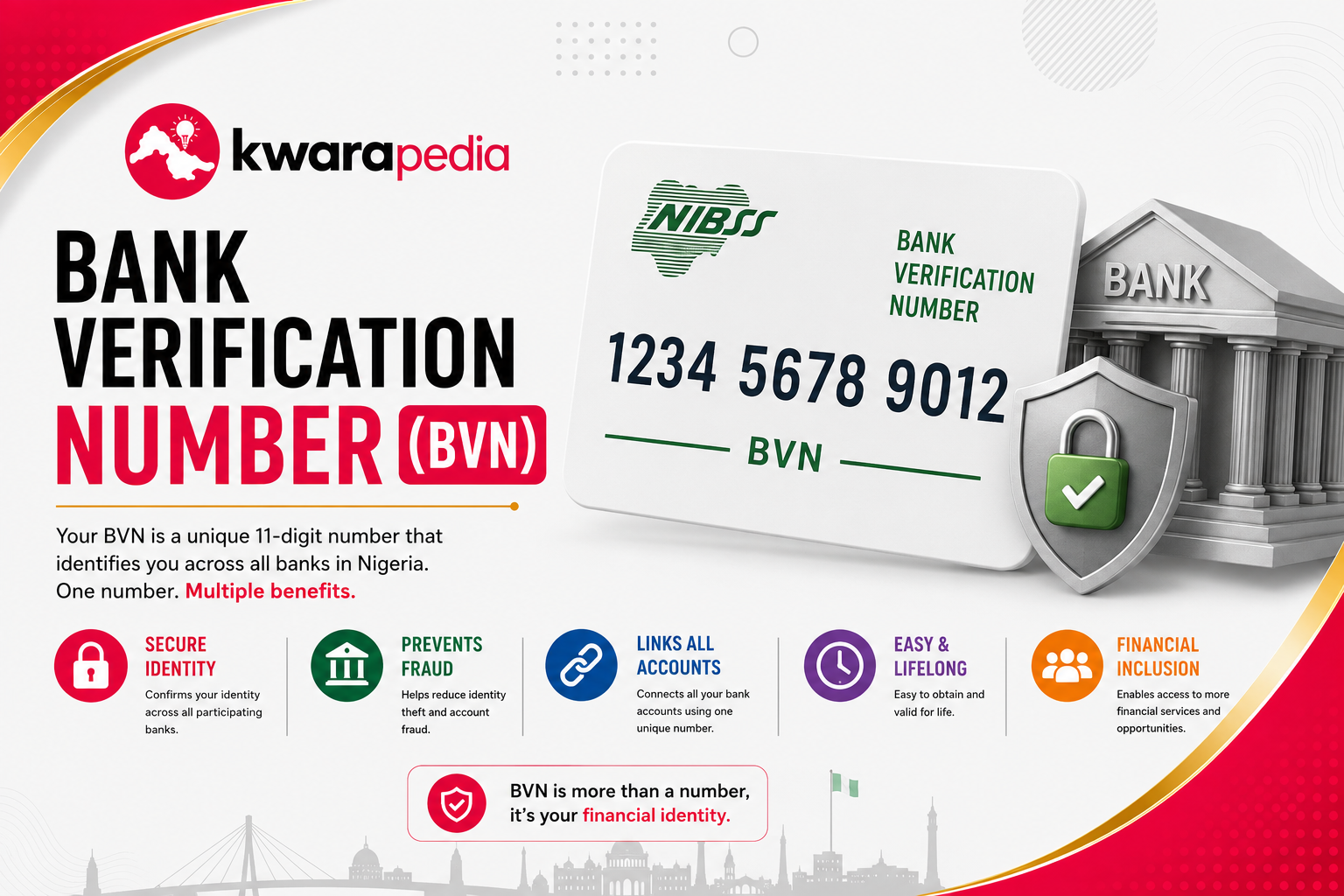
The Bank Verification Number (BVN) is a unique 11-digit identification number assigned to customers enrolled in Nigeria’s banking system. The BVN strengthens banking security by providing a single, verifiable identity that links an individual’s accounts across participating banks.
The Central Bank of Nigeria (CBN) introduced the BVN in collaboration with the Nigeria Inter-Bank Settlement System (NIBSS) to combat identity theft, fraud, multiple identities, and unauthorised access to bank accounts. Since its introduction, the BVN has become an important requirement for opening and operating bank accounts, accessing various financial services, and verifying customers within Nigeria’s banking sector.
Today, the BVN serves as one of the most important means of customer identification in Nigeria’s financial system and plays a key role in promoting secure, efficient and reliable banking services.
What Is a Bank Verification Number (BVN)?
A Bank Verification Number (BVN) is a unique biometric identification number that a customer receives after completing the BVN enrolment process.
Unlike an account number, which identifies a specific bank account, a BVN identifies the customer rather than the account. As a result, one BVN can link multiple accounts belonging to the same person across different banks in Nigeria.
The BVN remains the same throughout a customer’s lifetime and provides a consistent identity across participating financial institutions.
History of the BVN
The Central Bank of Nigeria (CBN) introduced the BVN initiative in partnership with the Nigeria Inter-Bank Settlement System (NIBSS).
The partners officially launched the system in February 2014, with nationwide enrolment beginning shortly afterwards. Although the initiative initially served as a voluntary security measure, it later became mandatory for bank customers to link their accounts to a BVN.
The initiative aims to improve identity management in Nigeria’s banking sector, reduce fraudulent activities, and strengthen confidence in the country’s financial system.
What Does the BVN Contain?
During BVN enrolment, certain personal and biometric information is captured to establish a unique identity for the customer. This information typically includes:
- Full name
- Date of birth
- Gender
- Residential address
- Telephone number
- Photograph
- Fingerprints
- Signature
The combination of demographic and biometric information helps ensure that each customer is assigned only one BVN.
How Does the BVN Work?
When a customer enrols for a BVN, the banking identity system securely captures and stores their biometric and personal information.
After issuing the BVN, participating banks can link it to all eligible accounts belonging to the customer. When the customer carries out certain banking transactions or requests financial services, the BVN can help verify their identity.
This allows participating financial institutions to recognise the same customer across different banks while reducing the risk of duplicate identities and fraudulent activities.
Features of the BVN
The Bank Verification Number has several important features:
- It consists of 11 digits.
- It is unique to one individual.
- It remains the same for life.
- It can be linked to multiple bank accounts.