


The political storm currently raging within the Kwara State chapter of the All Progressives Congress (APC) is no longer merely about who emerged from a primary election. It has evolved into a broader debate about succession, party unity, zoning, electoral strategy, and the future of the APC in one of its most symbolic states.
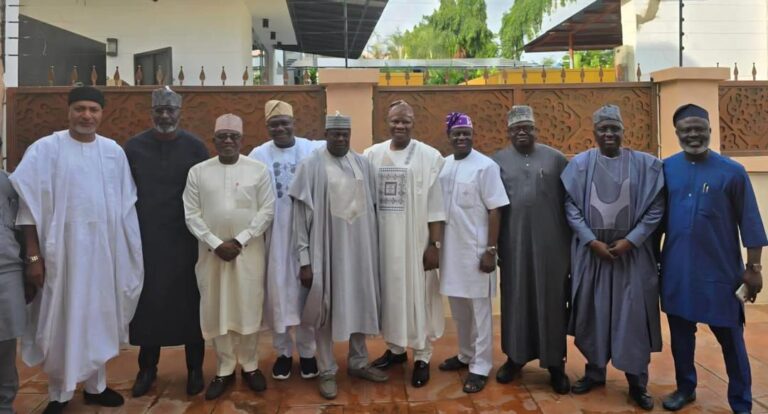
The emergence of Speaker Yakubu Salihu Danladi as the party’s governorship candidate was expected to settle the succession question and provide a rallying point for stakeholders. Instead, it has produced an unusual coalition of opposition from within the party itself. The decision of ten governorship aspirants to jointly challenge the outcome and seek intervention from President Bola Ahmed Tinubu underscores the depth of concerns among influential stakeholders.
For observers of Kwara politics, this is perhaps the most significant internal challenge facing the APC since the “O To Ge” movement dismantled the long-standing political establishment in 2019. The implication is clear: whoever eventually emerges as the consensus choice must possess not only political strength but also the capacity to unite diverse interests across the state’s three senatorial districts.
The real question before the APC leadership is not who has the loudest supporters or the strongest structure. Rather, it is who possesses the combination of acceptability, competence, political maturity, electoral appeal, and the ability to preserve the gains of the AbdulRahman AbdulRazaq administration while keeping the party united.
A Coalition of Heavyweights
The ten aspirants who have questioned the process are not political lightweights. They collectively represent decades of experience across governance, business, academia, law, community development, and party administration.
Among them are serving and former senators, former party chairmen, accomplished professionals, philanthropists, federal lawmakers, and grassroots mobilisers. Their collective dissatisfaction has transformed what might have been an ordinary post-primary disagreement into a major political conversation. Each aspirant brings distinct strengths to the table.
Senator Saliu Mustapha: The Political Powerhouse
Among the contenders, Senator Saliu Mustapha remains one of the most politically formidable figures. His influence within Kwara Central, his role in national politics, and his current position in the Senate give him considerable visibility.
Mustapha commands significant grassroots loyalty and possesses the financial and organisational capacity required for a statewide campaign. Many political analysts believe he would be a strong electoral candidate.
However, his candidacy faces the challenge of zoning perceptions. With the incumbent governor coming from Kwara Central, convincing stakeholders to support another candidate from the same district may prove difficult. Furthermore, his widely perceived political differences with the current governor could complicate efforts at reconciliation. For President Tinubu, choosing a candidate seen as being in direct contest with the governor’s political camp may not necessarily be the easiest path toward party unity.
Ambassador Yahaya Seriki Gambari: The Bridge Builder
Before the emergence of Speaker Danladi, many observers believed Ambassador Yahaya Seriki Gambari was the leading contender. His philanthropic activities, business success, and extensive grassroots network earned him broad support.
Several aspirants reportedly aligned with him before the primary, making him one of the most acceptable figures across various blocs.
His greatest strength remains his ability to connect with both political elites and ordinary voters. Yet the circums