


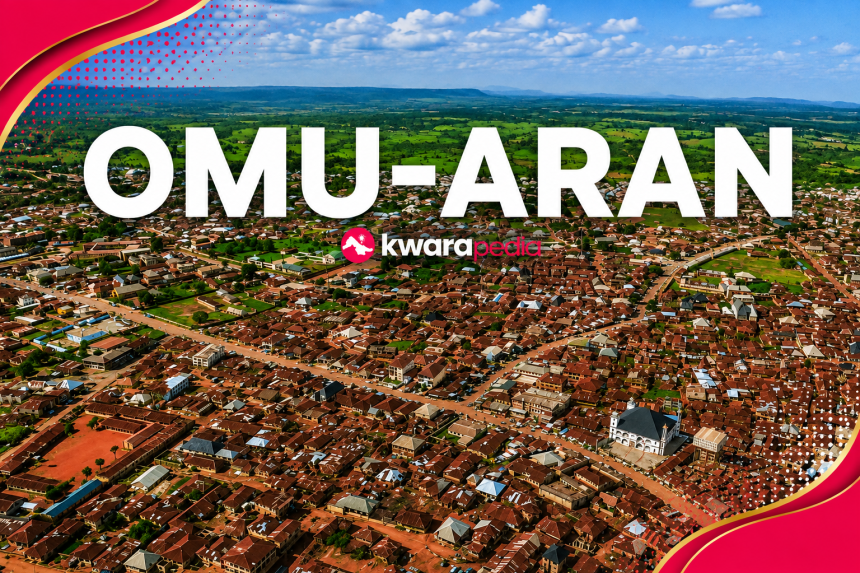
Quick Facts
- Status: Head Post of Ìgbómìnà Land
- Senatorial District: Kwara South
- Region: Igbomina Land
- Traditional Ruler: The Olomu of Omu-Aran
- Current King: HRM Oba Abdulraheem Oladele Adeoti (Olomu Efon II)
- Traditional Institution: Olomu-in-Council
- Local Government Area: Irepodun
- Indigenes of Omu-Aran: Ọmọ Olọ́mù Apẹran (the child of Olomu Aperan)
- Population: Estimated over 100,000
- Predominant Ethnic Group: Yoruba (Igbomina subgroup)
- Primary Language: Yoruba (Igbomina Dialect)
- Religion: Islam, Christianity, and Traditional Religion
- Major Festival: ÒGBÓ Festival (Orugbo Festival)
- Notable Landmark: Landmark University
- Postal/Zip Code: 251101
Overview
Omu-Aran is one of the largest and most historically significant towns in Kwara State, Nigeria. It serves as the headquarters of Irepodun Local Government Area and is widely regarded as the political, cultural, and economic centre of the Igbomina people in Kwara State. Located in the southern part of the state, Omu-Aran occupies a strategic position along major transportation routes linking Kwara with Ekiti, Osun, and Kogi States.
The town is renowned for its rich cultural heritage, vibrant traditional institutions, thriving agricultural economy, and growing educational sector. Over the years, Omu-Aran has produced notable political leaders, academics, professionals, entrepreneurs, and public servants who have contributed significantly to the development of Kwara State and Nigeria.
Historical Background
Omu-Aran has a rich history spanning over 500 years. According to oral tradition, the town was founded due to a migration of people from Ile-Ife, the spiritual cradle of the Yoruba people. A severe drought struck Ile-Ife, and the oracle was consulted to determine the cause. The oracle declared that the town was overcrowded and that some people must leave. Several princes were selected to migrate to new lands, each given a symbol of authority.
One of the selected princes was Olomu-Aperan, the founder of Omu-Aran. He was the adopted child of Omutoto (also spelled Omitoto), one of the wives of Oba Olofinaiye of Ile-Ife. Omutoto was also the mother of Owa Ajibogun, the founder of Ijesha land — a tradition accepted in both Ilesha and Ile-Ife today. Olomu-Aperan became the custodian of the Ogbo, a symbol of authority and oneness among the Council of Elders in Ile-Ife. He left Ile-Ife with the Ogbo and established various kingdoms, with Omu-Aran as his principal settlement.
The town was originally called “Omu”, derived from Omutoto, the matriarch whose children established the first settlement at Odo-Omu between the 13th and 14th centuries. The name was later changed to Omu-Aran around 1400 CE when the people moved to their present site.
Governance & Traditional Institution
The Olomu of Omu-Aran
The traditional ruler of Omu-Aran bears the title Olomu of Omu-Aran, one of the most respected traditional stools in Igbomina land and Kwara State. A first-class monarch who serves as the spiritual, cultural, and symbolic head of the Igbomina people.
The Olomu serves as the custodian of the town’s customs, traditions, and cultural heritage. The traditional council, comprising chiefs and title holders, plays an important role in community development, dispute resolution, and cultural preservation.
Political Representation
Political representation in Omu-Aran is anchored within the Ekiti/Isin/Irepodun/Oke-Ero Federal Constituency of Kwara State and falls under the Kwara South Senatorial District.
Community Development
Groups like the Omu-Aran Peoples’ Movement (OPM), Omu-Aran Peoples’ Forum (OPF), and Omu-Aran Development Association (ODA) support socio-economic initiatives, political summits, and infrastructure projects.
Cultural Identity & Language
The Igbomina Identity
Omu-Aran is the Head Post of Ìgbómìnàland — the cultural and political capital of the Igbomina-Yoruba people. The Igbomina are a distinct sub-group of the Yoruba nation, with their own dialect, customs, and traditions that share similarities with other Yoruba groups while maintaining unique cultural markers.
Language
The primary language spoken is the